
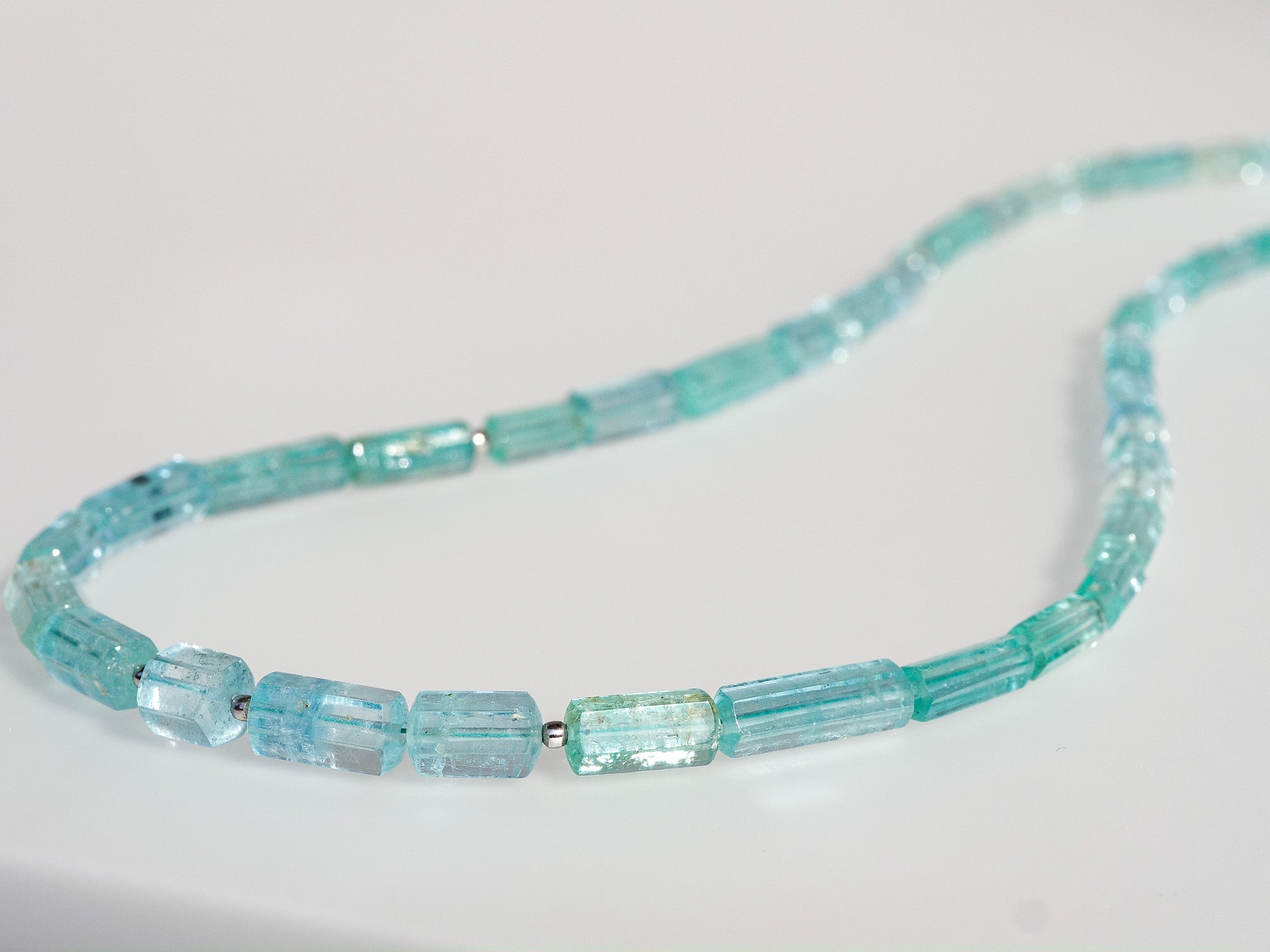


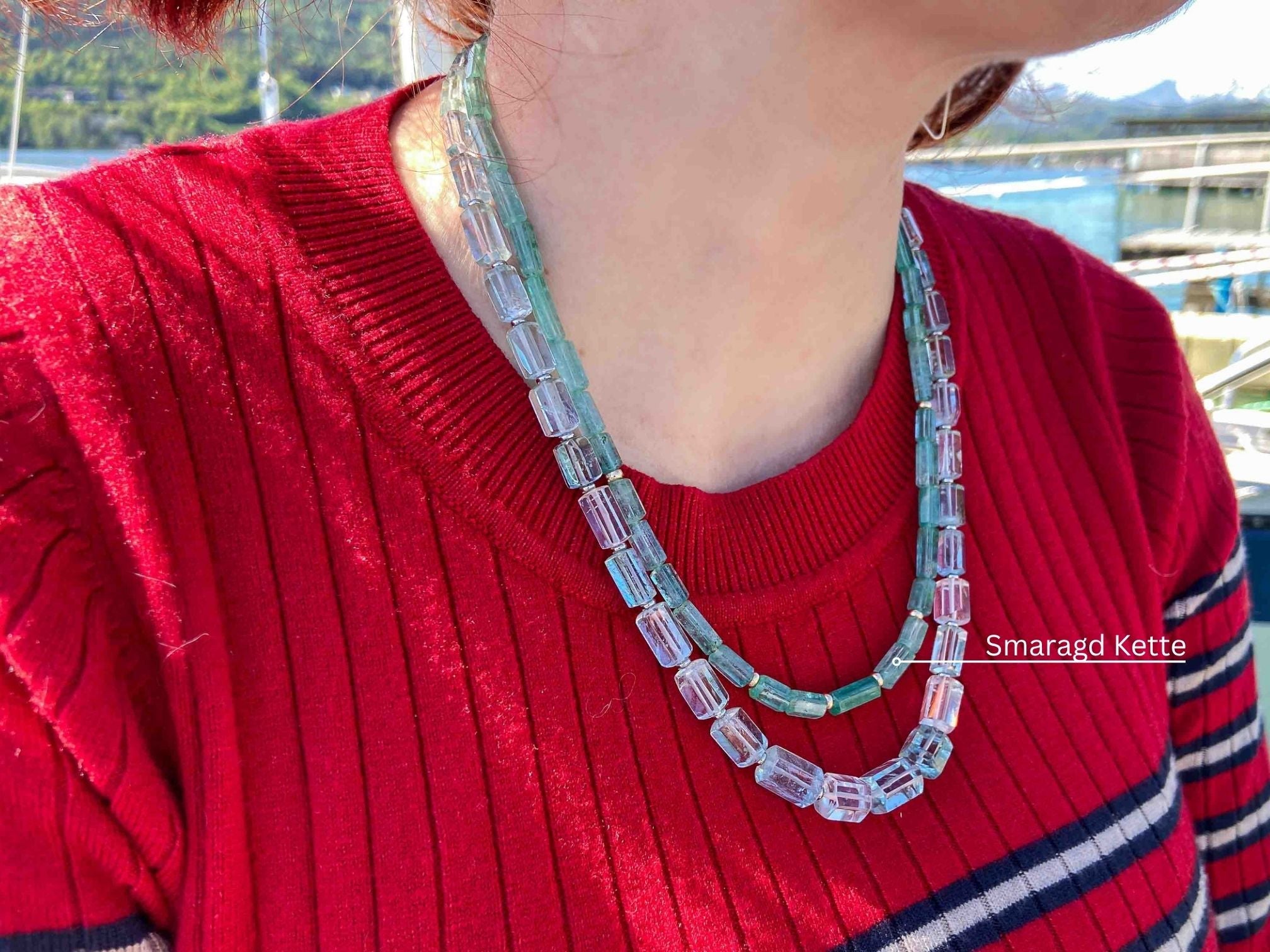
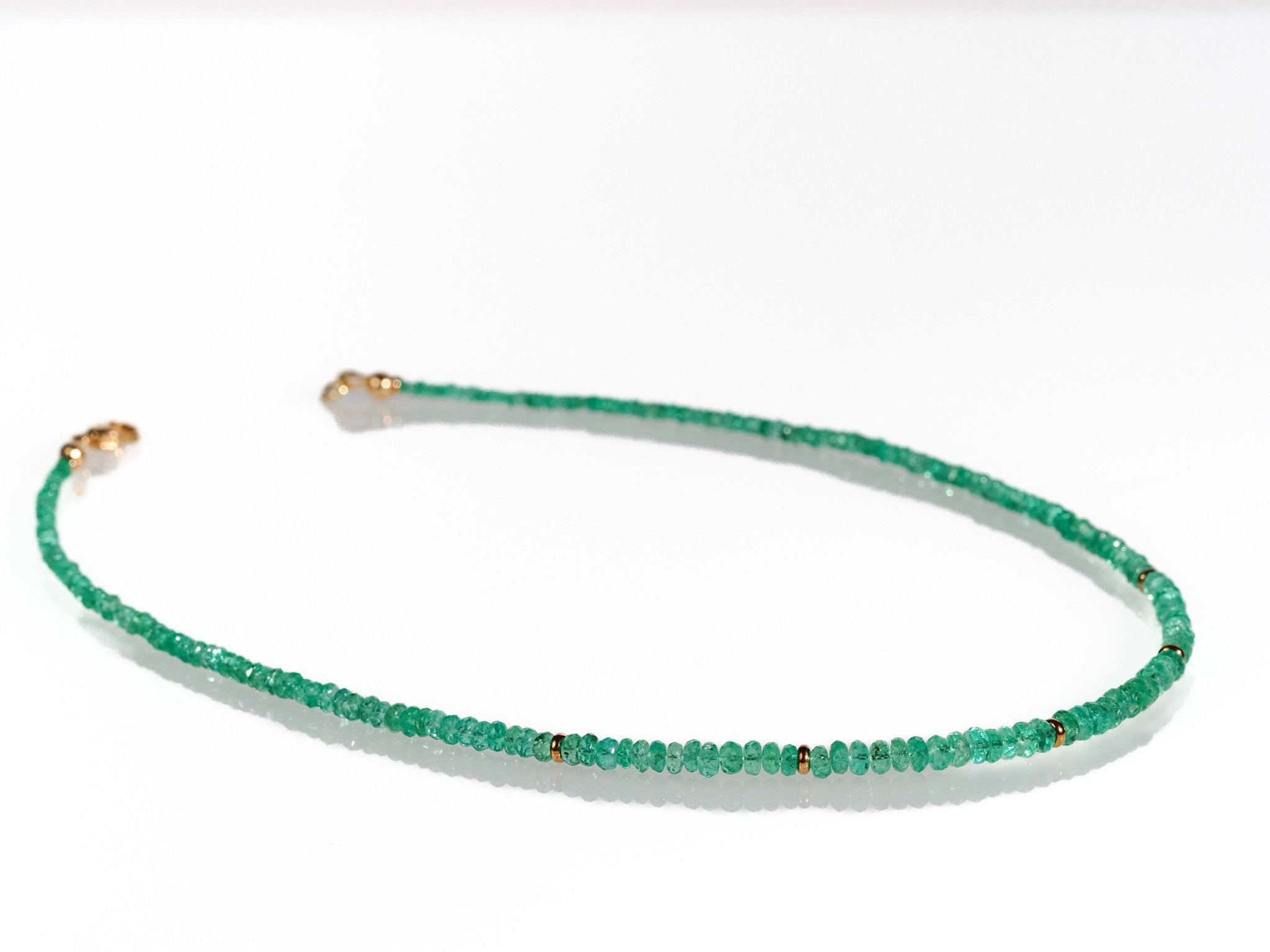
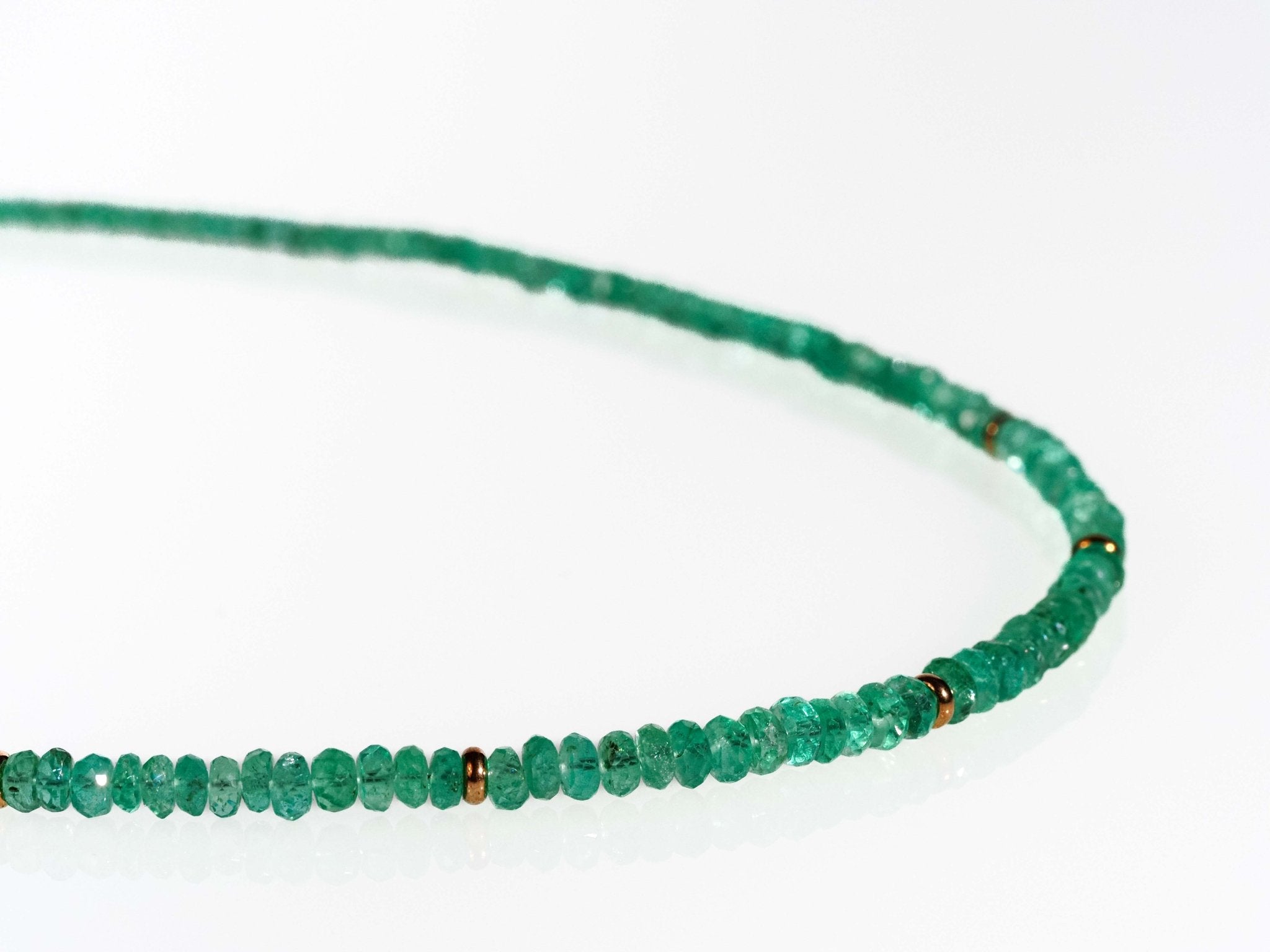
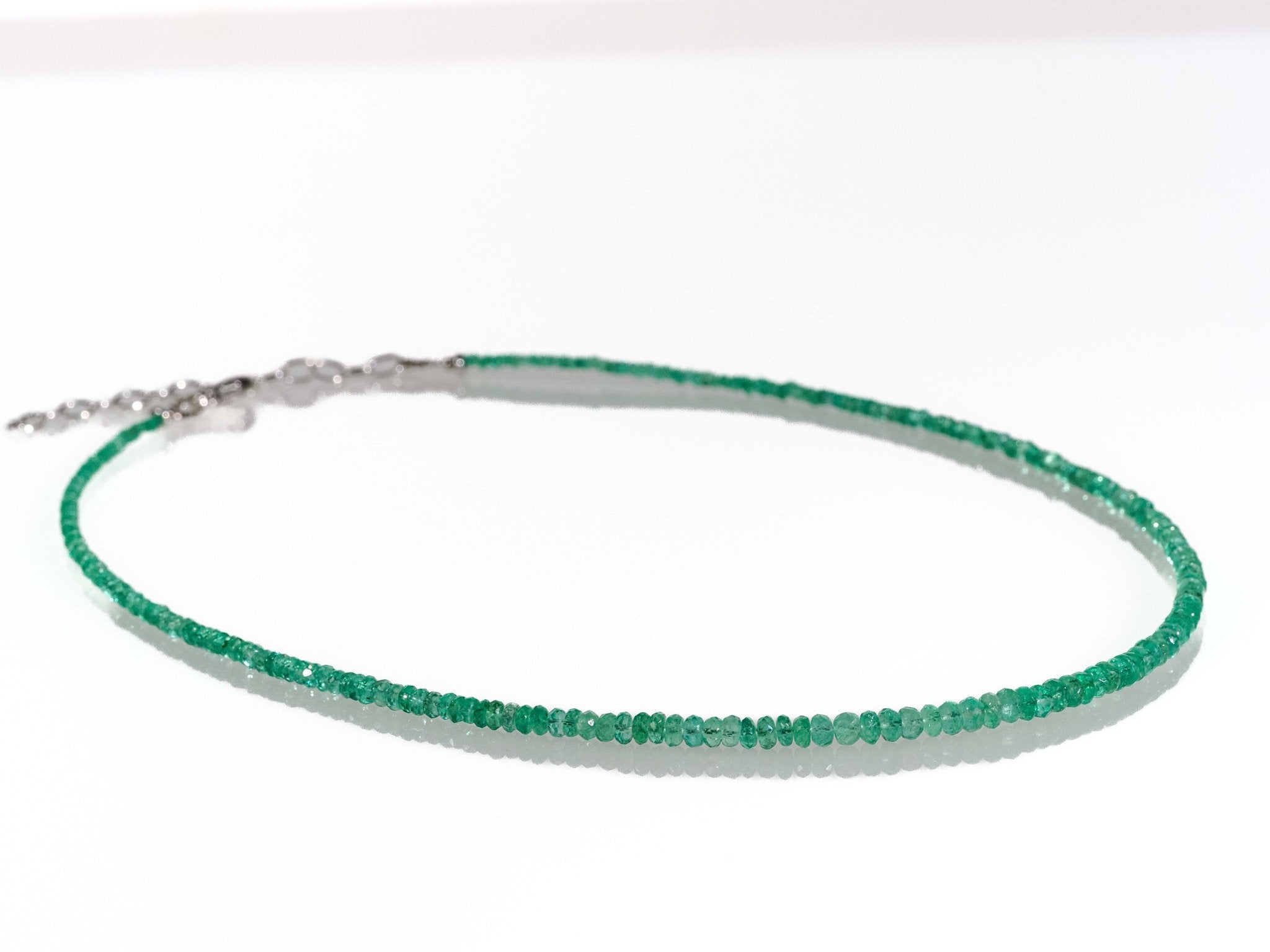
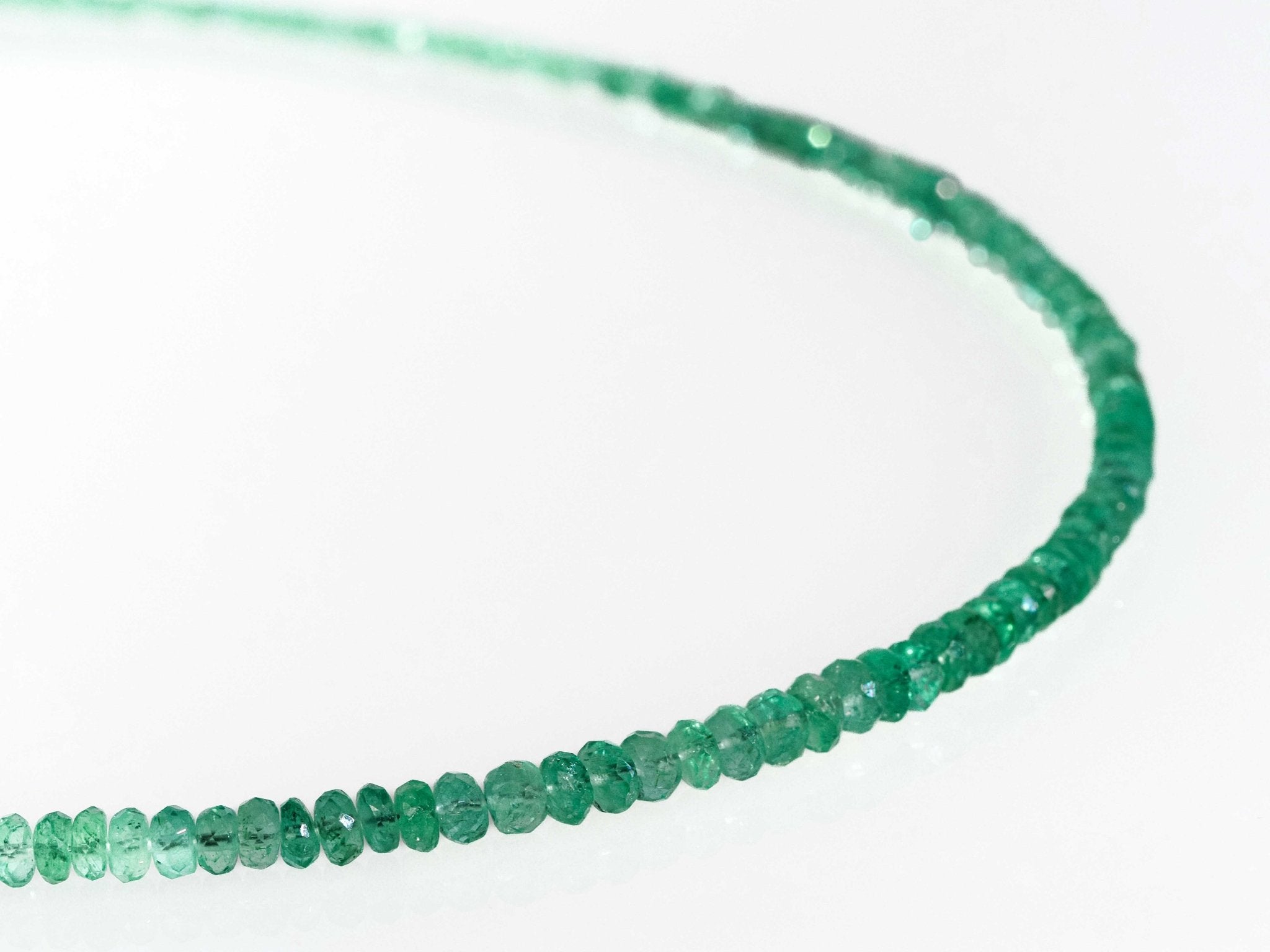
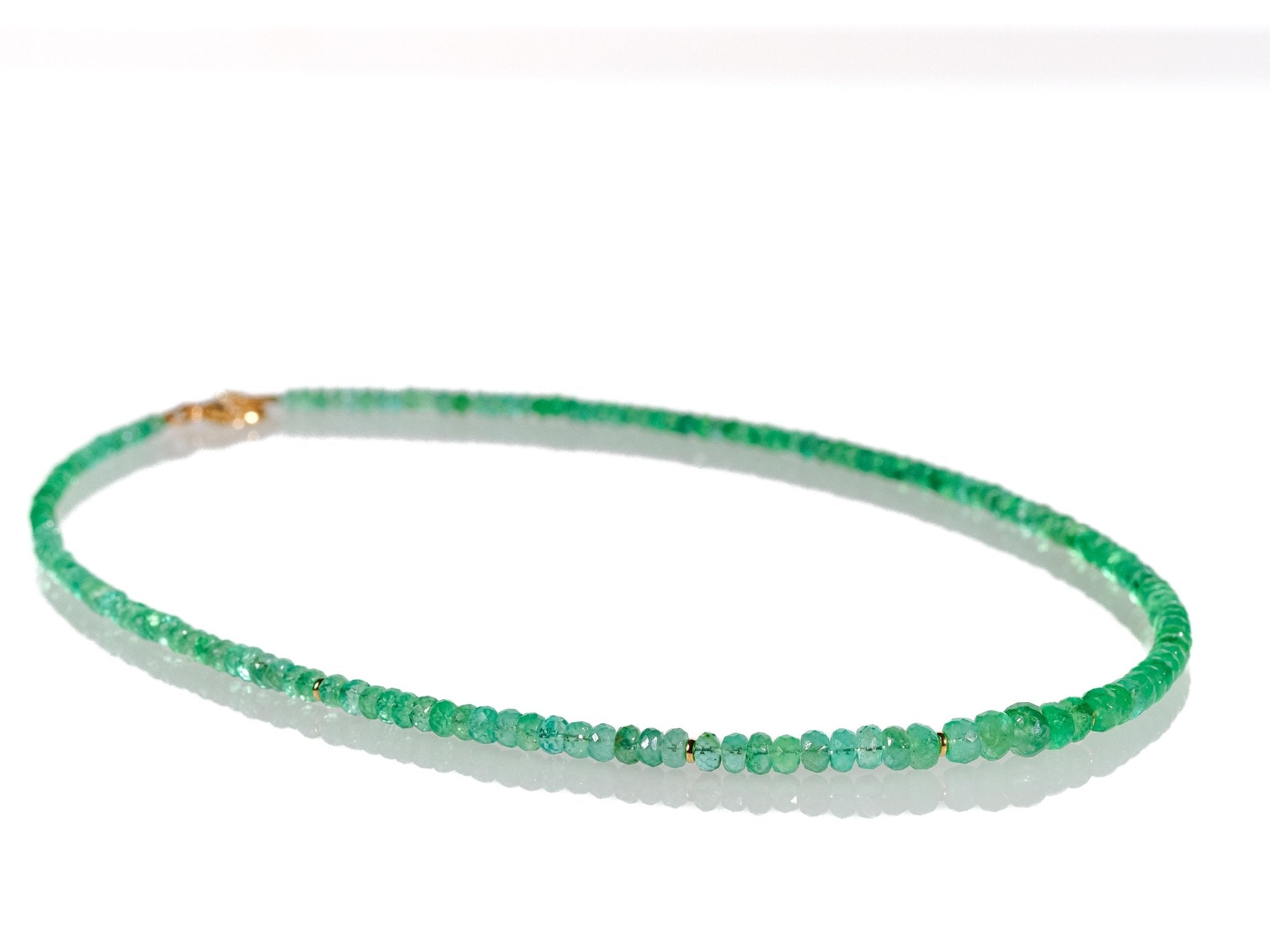
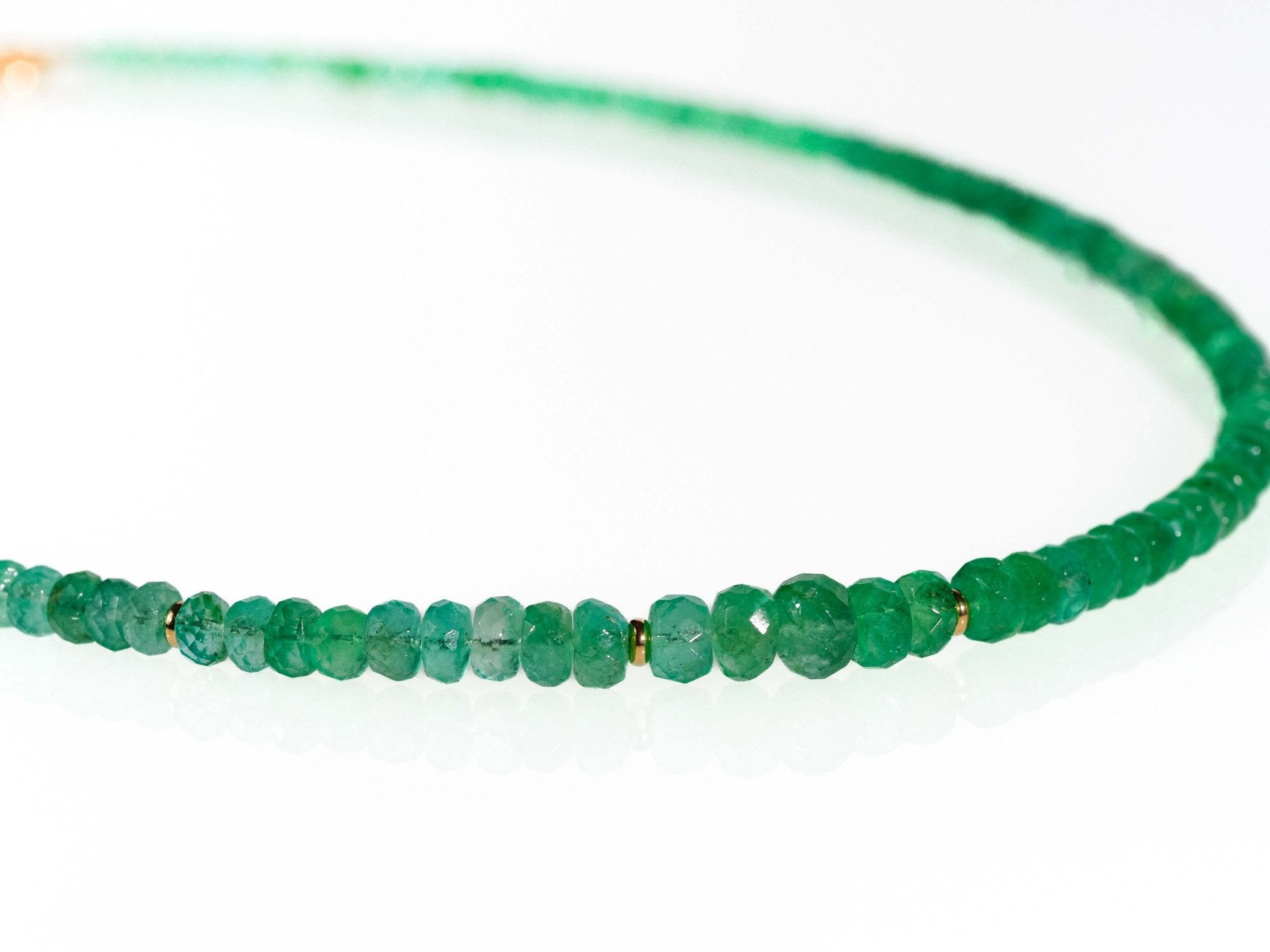
Smaragd Ketten und die Magie des grünen Edelsteins
Nature presents a fascinating variety of colors and shapes that are hard to beat in terms of beauty and design. But from this impressive range, the green emerald stands out as an exceptional gem.
It is considered one of the most sought-after and valuable gemstones in the world for good reason, prized for both its majestic color and its rarity.
The emerald's color palette varies depending on its origin, captivating with its characteristic shades of green, often accompanied by bluish or yellow undertones. This unique play of colors gives it an incomparable radiance that sets it apart from other gemstones - but more on that later.
In many eyes, a genuine emerald necklace represents the ultimate in elegance and natural perfection in the world of gemstones. An emerald necklace combines the unadulterated power of nature with a timeless aesthetic that will last for generations. Natural emeralds with intense color are particularly in demand for our emerald necklaces.
Interessantes und Wissenswertes rund um den Smaragd
The emerald, known for its fascinating green color and rarity, is one of the most valuable and sought-after gemstones in the world. Its name is derived from the Greek term "smaragdos", which means "green stone" and established its extraordinary reputation among collectors and jewelry lovers thousands of years ago.
The green gemstone, better known as emerald, belongs to the exquisite beryl family and is considered the most precious representative of these colored gemstones.
The emerald owes its incomparable green to the fine traces of chromium, vanadium and iron, whose respective concentrations can conjure up an impressive range of green tones.
While emeralds are created through the interaction of these elements, there are also varieties of green beryl that only contain chromium or vanadium. These gemstones are simply referred to as "green beryl".
Let's delve into the fascinating world of this wonderful gemstone together to find out more about the remarkable green treasures that we use with the utmost care and attention to detail for our exclusive emerald necklaces.
Smaragd Ketten kaufen- bei Elstar

It is very important to us to use natural emeralds for our emerald necklaces. These gemstones are often not completely transparent, but translucent, and they present a variety of different shades of green.
You will find precise information on quality and any treatments in the respective item description.
For us, it is not only the external beauty of the gemstones that is important, especially the emerald necklaces, but also the power and vibrations that emanate from untreated gemstones. The energy and power of the genuine emerald remains unchanged in an untreated natural gemstone.
Die Farbe und Herkunft des echten Smaragds spielen eine entscheidende Rolle bei der Auswahl von Smaragden für unsere Smaragdketten
When talking about the color emerald green, the image of a shiny green gemstone with a particularly intense and deep hue usually immediately comes to mind. However, there is no one universal "typical" shade of emerald, as genuine specimens of this gemstone vary in their shade of green depending on their geographical origin.
The most important sites for emeralds are located in Colombia, particularly in the regions around Muzo and Chivor, as well as in Brazil. In Brazil, the Minas Gerais mine in particular is widely known for its high-quality emeralds.
The emeralds from Colombia and Brazil are characterized by a warmer, slightly yellowish green hue, which gives them a unique character. These specific color characteristics make them particularly sought-after, also for the design of our precious emerald necklaces.
Another important source of high-quality emeralds are various African locations such as Zimbabwe, Zambia, Madagascar and Tanzania. Zambia in particular is known for its renowned emerald deposits, whose gemstones stand out due to their intense, slightly cooler coloring with a subtle blue tinge.
An interesting detail is that Zambian emeralds often have fewer inclusions than their well-known South American counterparts due to their formation process. They grow in rock formations that are less susceptible to natural fractures and inclusions, which has a positive effect on their purity.
The history of emerald finds goes back to ancient Egypt, where emerald necklaces and pieces of jewelry can still be admired in museums today.
The green gemstone has always been highly valued in the Orient, even if it was only discovered in small quantities there, for example in Persia, India and the Ottoman Empire.
Later, the first finds in South America, particularly in Colombia and Brazil, led to a new era of emerald mining. Today, Colombia, Brazil and South Africa are considered the most important places where this valuable green gemstone is found.
However, emeralds are also found in Austria in the Habachtal valley. They are very small, but fun to look for!
The emerald is prized as one of the most valuable gemstones due to its exceptional rarity. Thanks to its vibrant, multifaceted and unmistakable colors, it is also very popular, especially in the design of our exclusive emerald necklaces.
Our emerald necklaces are characterized by individuality and uniqueness, as each emerald necklace is one of a kind. We attach great importance to the origin and quality of the emeralds we use.
Another fascinating feature of emeralds is their characteristic inclusions. Eye-clean emeralds, which have no visible inclusions whatsoever, are among the absolute exceptions and are therefore extremely rare and correspondingly expensive.
However, as the vast majority of emeralds have clear or less pronounced inclusions, they are much more tolerant of such impurities than most other gemstones.
The structure of the inclusions visible inside the emerald is often referred to as "jardin", a French word that translates as "garden" and refers to the unusual, almost natural aesthetics that make these gemstones unique.
The inclusions also offer a valuable opportunity to determine the origin of the stone, as their characteristics allow conclusions to be drawn about where the stone was found.
Particularly noteworthy among emeralds are the so-called trapiche emeralds. This unusual variety is characterized by a striking pattern: a star-shaped or spoke-like black inclusion, which makes it a rare and sought-after form of this gemstone.